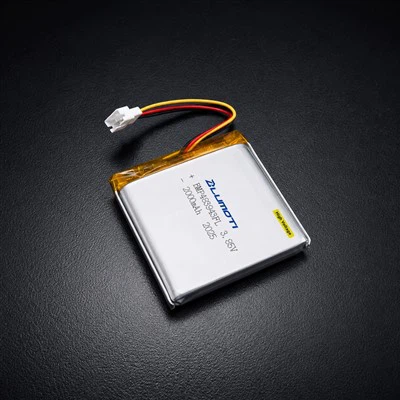


If you're a business or engineer working with small, high-performance electronics—think wearables, compact IoT sensors, or mini remote controls—you’ve likely felt the frustration of a 1000mAh Li-ion Polymer (Lipo) battery dying at the worst possible time. As a battery supplier that’s spent over a decade refining cells for just these use cases, I’ve seen firsthand how subpar charging practices don’t just shorten a battery’s runtime—they cut its total lifespan by half, or worse. Today, I’m breaking down the science-backed, practical steps to optimize the charging process for a 1000mAh Lipo battery, drawing on our in-house testing and real-world customer feedback. Let’s dive in.
First, it’s critical to ground this in what makes a 1000mAh Lipo unique. Unlike lead-acid or nickel-cadmium batteries, Lipo cells use a polymer electrolyte, which allows for thin, flexible form factors but is sensitive to charging parameters. A 1000mAh cell is designed to deliver a steady 3.7V nominal voltage, with a full charge threshold of 4.2V and a minimum discharge threshold of 3.0V—straying from these numbers is where problems start. Overcharging beyond 4.2V causes the lithium-ion electrodes to degrade and form harmful metallic lithium deposits, while discharging below 3.0V can damage the cell’s internal structure permanently. That’s why optimizing charging isn’t just about “juicing up faster”—it’s about balancing charge speed, temperature, and voltage to protect the 1000mAh cell while maximizing its usable capacity.
Let’s start with the most fundamental rule: never deviate from the recommended charging profile. Lipo batteries use a two-step charging process, but for small cells like our 1000mAh units, this profile is non-negotiable. The first step is constant current (CC) charging: you apply a steady current of 0.5C to 1C until the cell reaches 4.2V. For a 1000mAh battery, 0.5C translates to a 500mA charge current, and 1C is 1A. Wait—you might be thinking, “Why not use 1C to charge faster?” Our testing shows that while 1C can get a 1000mAh cell to ~70% charge in 30 minutes, this high current generates excess heat that accelerates electrolyte breakdown. For end products that prioritize long battery life over ultra-fast top-ups, 0.5C is the sweet spot. If you need faster charging for a specific use case, limit 1C charging to emergency top-ups, and never run it repeatedly—this aligns with standards from the International Electrotechnical Commission (IEC) for small Lipo cells.
Once the cell hits 4.2V, you switch to constant voltage (CV) charging: you hold that 4.2V steady, gradually reducing the current until it drops to 0.05C (50mA for a 1000mAh cell). This is when the battery reaches a full, safe charge. Skipping this CV step leaves lithium ions only partially inserted into the anode, robbing you of 10-15% of the cell’s total capacity. I’ve seen this mistake time and time again with hobbyists or small product teams: they stop charging at 4.2V regardless of current, and wonder why their 1000mAh batteries only last 8 hours instead of 10. That’s a 20% capacity loss, all from cutting corners on the CV phase.
Temperature is another make-or-break factor for 1000mAh Lipo charging. Lithium-ion cells are fussy about temperature extremes during charging: below 0°C, lithium ions can plate onto the anode instead of inserting, creating needle-like dendrites that short-circuit the cell. Above 45°C, the polymer electrolyte can start to degrade, increasing the risk of swelling or reduced cycle life. Our internal tests on 1000mAh units found that charging at room temperature (20-25°C) gives the best balance of speed and safety, with a full charge taking ~2.5 hours at 0.5C. If your device will be used in cold environments (like outdoor IoT sensors in winter), you’ll need a temperature-compensated charging circuit—some of our customers in Nordic countries use integrated NTC thermistors to adjust charging current when the cell drops below 10°C, preventing lithium plating without slowing charging.
Charging environment matters too. Avoid charging the battery in enclosed spaces with poor ventilation, especially if it’s a multi-cell pack, but even a single 1000mAh Lipo can generate small amounts of heat during charging. We’ve had customers tell us they charged their 1000mAh batteries inside a sealed plastic device overnight, only to find the case warm to the touch—this heat buildup over time shortens the battery’s cycle life by 30% after 500 charges. If you’re integrating the battery into a product, leave a small gap around the cell for airflow, or use a soft, breathable casing. For testing or lab use, charge on a non-flammable surface (never a wooden table or fabric) just as a basic safety precaution.
Now, let’s talk about charging hardware—this is often overlooked but critical. Using a generic charger designed for larger batteries can ruin a 1000mAh Lipo quickly. Larger cells, like our 2000mAh units, have different current and voltage thresholds, and generic chargers may push too much current or overvolt the smaller 1000mAh cell. For example, a charger set for a 2000mAh battery at 1C (2A) would pump double the safe current into a 1000mAh cell, causing immediate overheating and lithium plating. If you need a charger tailored for small Lipo cells, check for models that include a specific 1000mAh profile, or use a standalone Lipo charger with adjustable current limits. For teams building custom devices, we recommend integrating a battery management system (BMS) or charge controller chip that’s calibrated for 3.7V Lipo cells—chips like the MCP73831 work well for small, single-cell units like the 1000mAh, as they automatically handle CC/CV switching and temperature monitoring.
You might be wondering: what about charging frequency and depth? Does topping up a partially discharged battery hurt the 1000mAh Lipo? The good news is that Lipo batteries don’t suffer from the “memory effect” that plagues older NiCd batteries. That means you can charge a 50% discharged cell to 100% without any negative effects—no need to drain it fully first. In fact, deep discharging a Lipo (below 3.0V) is far more harmful than regular top-ups. Our data shows that charging a 1000mAh cell when it drops to 3.5-3.6V instead of 3.0V extends its cycle life by ~250 charges. For product designs, set a low-voltage cutoff at 3.2V for the end device, so users aren’t running the battery too low before charging.
Let’s also address common myths I’ve encountered as a supplier. Some people think “fast charging” is always bad for Lipo cells, but that’s not entirely true. If you need to top up a 1000mAh battery quickly—say, for a remote control that died mid-use—a 1C charge rate (1A) for 15 minutes will get it to ~50% charge, which is safe for short-term use. The key is not making this a habit. Repeatedly charging a 1000mAh cell at 1C will increase internal resistance over time, reducing its maximum capacity by 10-15% after 200 cycles. So, reserve fast charging for emergencies, not regular use.
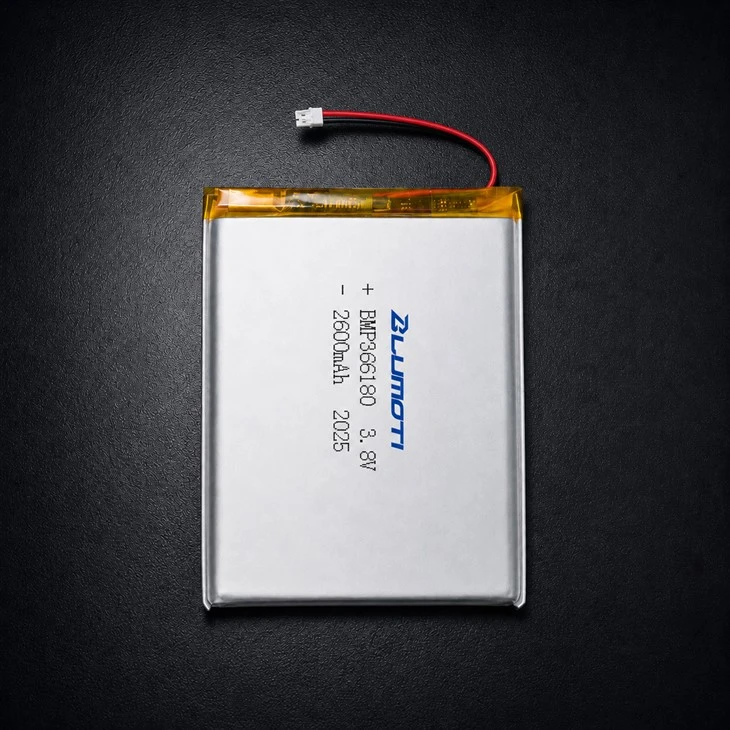

Another point: storage-related charging. If you’re not using a 1000mAh Lipo for a month or more, how you charge it for storage is crucial. We recommend charging the cell to 40-50% capacity before storing it at room temperature (20°C). A fully charged battery left in storage will degrade at 2-3% per month, while a partially charged one degrades at less than 1% per month. We include this guidance with every order, as we’ve seen customers store uncharged 1000mAh batteries for six months only to find them dead on arrival—this is easily avoidable with proper storage charging.
If you’re working on a project that uses smaller Lipo cells, you might also be interested in our related products. For teams needing even smaller capacities, our 100mAh and 50mAh Lipo batteries are designed for compact wearables and mini sensors, with the same strict charging guidelines applied. For higher-capacity needs, our 2000mAh units offer double the runtime for medium IoT devices. And for applications requiring consistent performance across temperature ranges, our High Voltage Lipo Battery line is optimized for extreme environments, with charging profiles adjusted to handle wide temperature swings without degradation.
At the end of the day, optimizing a 1000mAh Lipo’s charging process is about working with the cell’s inherent design, not against it. By sticking to the correct CC/CV profile, monitoring temperature, using calibrated charging hardware, and avoiding common mistakes like deep discharging or repeated fast charging, you’ll get the maximum capacity and lifespan out of every cell. If you’re a product designer, engineer, or buyer looking for reliable 1000mAh Lipo batteries tailored to your specific use case, we’re here to help. Contact our team to discuss your project requirements, whether you need custom form factors, temperature-resistant cells, or bulk orders for mass production. Our experts can also walk you through tailored charging guidelines to ensure your battery performs exactly as needed for your application.
References
- International Electrotechnical Commission (IEC) 62133:2019, Secondary cells and batteries containing alkaline or other non-acid electrolytes – Safety requirements for portable sealed secondary lithium cells, and for batteries made from them, for use in portable applications
- lithium-ion polymer battery charging best practices: Energy Storage Association (ESA) Technical Report on Small-Format Lipo Cell Performance Optimization, 2022
- Cycle Life Degradation in Lipo Cells: Journal of Power Sources, Volume 489, 2021, “Factors Affecting Long-Term Performance of Small Lithium Polymer Batteries for Consumer Electronics”
- Temperature Effects on Lithium Ion Plating: National Renewable Energy Laboratory (NREL) Report NREL/TP-5400-72456, 2018, “Thermal Management Strategies for Fast Charging of Electric Vehicle Lithium-Ion Batteries”