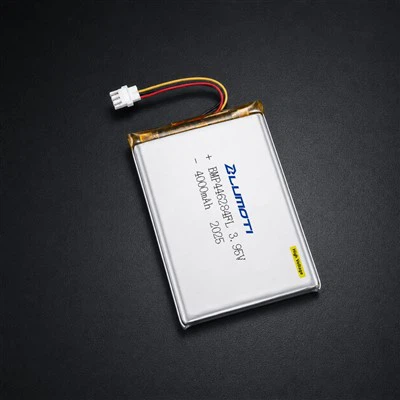


Hey there! As a supplier of 1000mAh Li - ion Polymer Batteries, I often get asked about the recommended charging temperature for these bad boys. So, let's dive right into it.


First off, it's super important to understand that the charging temperature plays a huge role in the performance, lifespan, and safety of a Li - ion Polymer Battery. A 1000mAh battery of this type is quite common, used in a variety of devices like small drones, smartwatches, and some portable gaming gadgets.
The Ideal Charging Temperature Range
The sweet spot for charging a 1000mAh Li - ion Polymer Battery is typically between 0°C and 45°C (32°F and 113°F). This is the range where the battery can accept a charge most efficiently. When the temperature is within this bracket, the chemical reactions inside the battery go as smoothly as they can. The lithium ions can move freely between the anode and the cathode, ensuring a proper and stable charge.
If you try to charge the battery at a lower temperature, say below 0°C, the electrolyte inside the battery becomes more viscous. This means the lithium ions have a harder time moving around. You might even end up with lithium plating on the anode. Lithium plating is bad news. It can cause short - circuits in the battery over time, reduce the battery's capacity, and in some extreme cases, it can even be a fire hazard.
On the flip side, if you charge the battery at a temperature above 45°C, the high heat can speed up the chemical reactions inside the battery too much. This can lead to a breakdown of the electrolyte and the battery's internal structure. The battery might start to degrade faster, losing its capacity more rapidly. It can also cause the battery to become swollen, which is definitely not a good sign.
Real - World Implications
Let's think about some real - world scenarios. If you're in a cold climate, like during a winter camping trip, and you try to charge your 1000mAh Li - ion Polymer Battery - powered device, it's not going to work as well as it should. The low temperature will slow down the charging process, and you might not get a full charge. You could even damage the battery over time if you keep charging it in such cold conditions.
On the other hand, if you leave your device in a hot car on a sunny day and then try to charge it, the high temperature can cause the problems I mentioned earlier. The battery might not charge properly, or it could start to deteriorate quickly.
How We, As Suppliers, Ensure Quality within the Temperature Range
As a supplier of 1000mAh Li - ion Polymer Batteries, we take every step to make sure our batteries perform well within the recommended temperature range. We use high - quality materials that can withstand the normal temperature variations within the 0°C to 45°C range. Our manufacturing processes are designed to optimize the internal structure of the batteries so that they can handle the chemical reactions efficiently at these temperatures.
We also test our batteries rigorously. We put them through a series of charge and discharge cycles at different temperatures within the recommended range to ensure they maintain their capacity and performance. And we do safety tests as well, to make sure that even if the temperature gets close to the upper or lower limit, the batteries remain safe to use.
Other Products in Our Lineup
We have a great range of other Li - ion Polymer Batteries apart from the 1000mAh ones. For example, we have the 653136 800mAh Rechargeable Lithium Polymer Battery. This battery is perfect for devices that need a bit less power but still high - quality performance. It follows the same recommended charging temperature guidelines as our 1000mAh batteries.
We also offer the Lithium Ion Polymer Battery 3.7V 500mAh. It's a smaller battery, but it packs a punch and is suitable for small, low - power devices. And if you're looking for an even smaller option, we have the Lithium ion polymer battery 3.7v 100mah.
For those who need high - capacity batteries, we've got the 103450 1800mAh Lithium - ion Polymer Battery. It can handle more power - hungry devices. And if you're interested in our full range of high - capacity options, check out our High Capacity Lipo Cells.
Why Temperature Matters in Battery Selection
When you're choosing a battery for your device, the recommended charging temperature is an important factor to consider. If your device is going to be used in extreme temperatures, you need to make sure the battery can handle it. For example, if you're developing a device for use in a cold - climate region, you might need a battery that can still charge effectively at lower temperatures.
Our 1000mAh Li - ion Polymer Batteries are designed to be versatile, but if you have specific temperature requirements, we can work with you to find the best solution. We understand that different applications have different needs, and we're here to help you make the right choice.
Contact Us for Your Battery Needs
If you're in the market for high - quality Li - ion Polymer Batteries, whether it's the 1000mAh ones or any of our other products, we'd love to talk to you. Whether you're a small business looking for batteries for your new product or a larger corporation in need of a reliable battery supplier, we've got you covered.
Just drop us a line, and we can start discussing your requirements. We can offer you detailed product information, samples for testing, and competitive pricing. Let's work together to find the perfect battery solution for your needs.
References
- Battery University: A comprehensive source for battery knowledge, including information on charging temperatures and battery chemistry.
- International Electrotechnical Commission (IEC) standards related to lithium - ion polymer batteries, which provide guidelines on safety and performance at different temperatures.
So, that's the lowdown on the recommended charging temperature for a 1000mAh Li - ion Polymer Battery. I hope this helps you understand why temperature is so important when it comes to charging your batteries. If you have any more questions, don't hesitate to reach out!