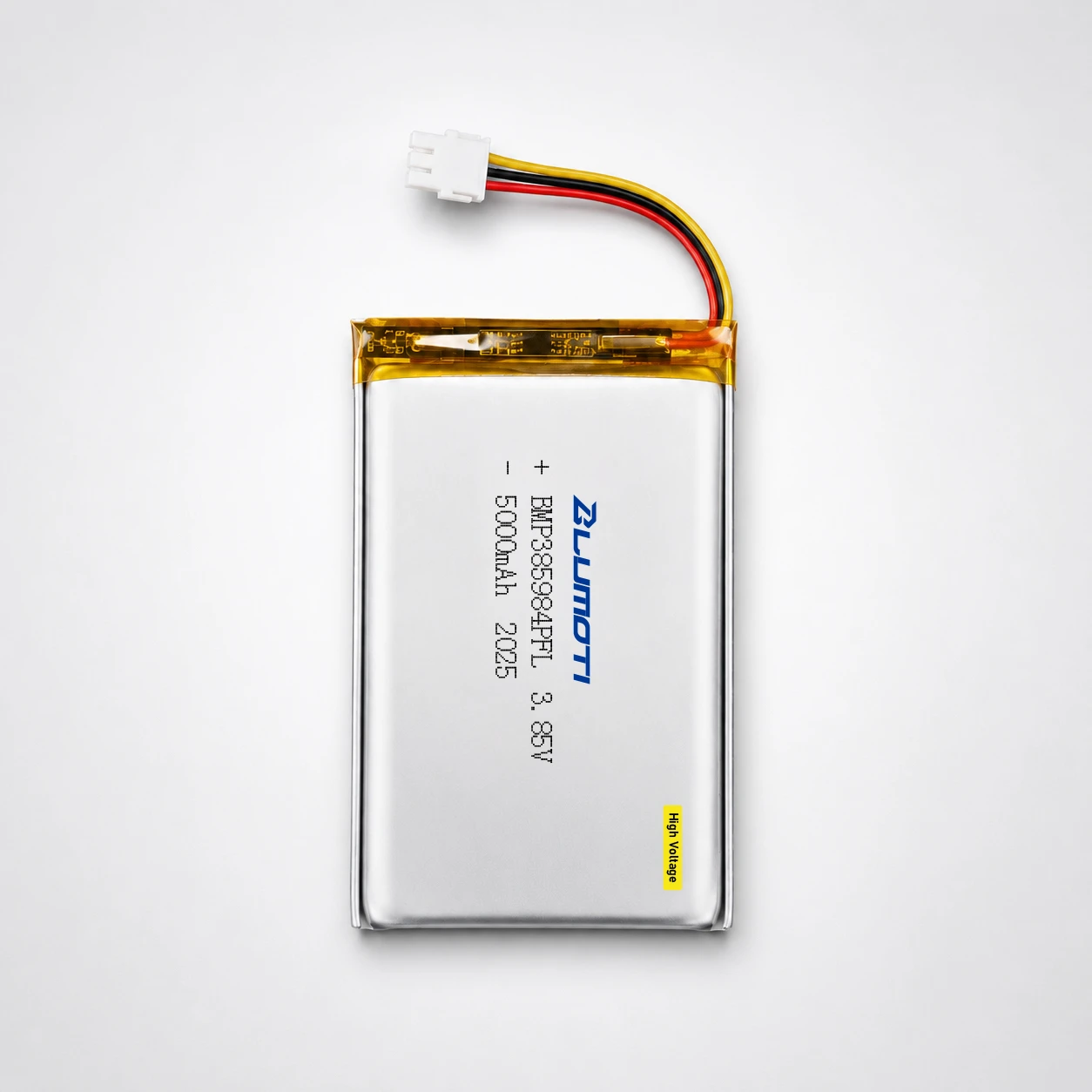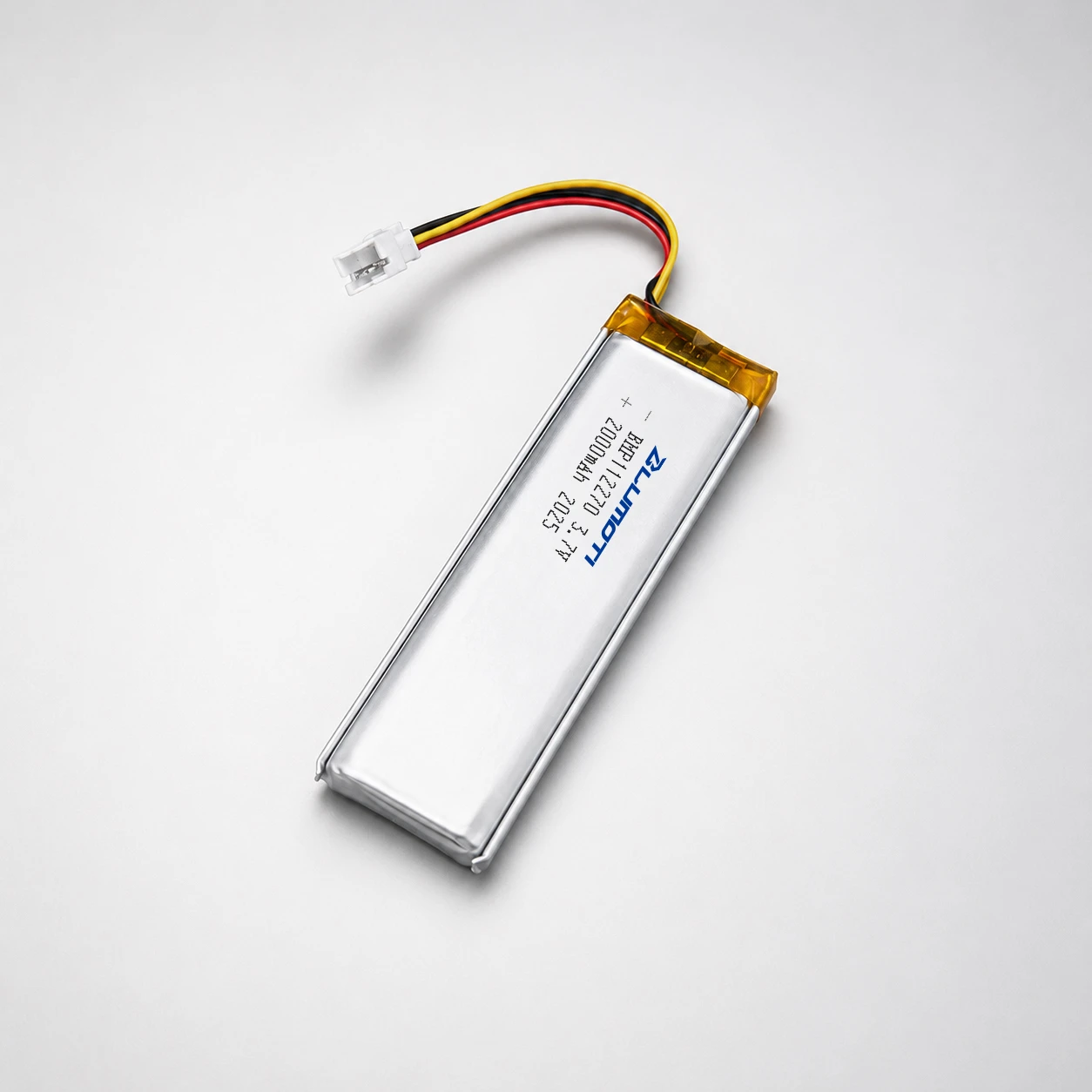

If you've ever chosen a lithium-ion battery based only on mAh, you're not alone. It's one of the most common mistakes buyers make.
A battery can look strong on paper, but still fail to deliver the runtime or power your device needs. Because real performance depends on more than just capacity.
In this guide, we'll show you:
- How to calculate actual battery runtime
- Why C-rate matters as much as mAh
- How to choose the right lithium-ion battery for your device
Why Battery Runtime Varies in Real Use
Higher mAh does NOT guarantee longer runtime.
Runtime only improves if the device load stays the same.A small mAh battery can outlast a large one in a high-drain device-if the discharge rate doesn't match.
3 Key Factors That Determine Battery Life
Battery Capacity (mAh).
How much charge the battery can store. Higher mAh = more energy.
Device Current Draw (mA).
How much power your device uses. Higher draw = faster drain.
Discharge Rate (C-rate).
How much current the battery can safely deliver.This decides whether the battery can run your device at all.
Simple summary:
- Capacity = how long it can run
- C-rate = whether it can run properly
How to Calculate Lithium-Ion Battery Runtime
Runtime (hours) = Battery Capacity (mAh) ÷ Device Current (mA)
Example 1 (Low-power device):3000mAh ÷ 100mA = 30 hours
Example 2 (High-power device):3000mAh ÷ 3000mA = 1 hour
Same battery, completely different runtime.
If your device is rated in watts:Runtime (hours) = (Capacity (Ah) × Voltage (V)) ÷ Power (W)
Example:3000mAh (3Ah) 3.7V battery → 11.1Wh11.1Wh ÷ 40W ≈ 0.2775 hours ≈ 16.65 minutes
Why real runtime is shorter
- Energy conversion loss
- Heat
- Battery aging
- Efficiency drop under high load
Calculations give you a realistic estimate, not an exact number.
Why C-rate Is Critical (Don't Ignore It)
Many buyers focus only on mAh-and end up with batteries that can't start their device.
What is C-rate?
C-rate = maximum discharge current relative to capacity.
Example:6000mAh (6Ah) battery
- 1C = 6A(1*6A)
- 2C = 12A(2*6A)
- 5C = 30A(5*6A)
If your device needs 30A peak, you need at least a 5C battery.
What happens if C-rate is too low?
- Weak startup
- Voltage drop
- Unstable performance
- Sudden shutdown
- Overheating
For power tools, robots, RC, medical & industrial devices:C-rate = just as important as capacity.
How to Choose the Right Lithium-Ion Battery (4 Simple Steps)
Step1:Measure working current & peak current
Know your device's real power demand.
Step2:Set required runtime
Decide how many hours you need per charge.
Step3:Calculate required capacity
Working current × runtime = minimum mAh
Example: 500mA × 8h = 4000mAh
Step4:Match C-rate to peak power
Make sure the battery supports your device's max current.
Beyond mAh & C-rate: What Else Matters?
- Cycle life: Longer lifespan = lower total cost
- Energy density: More power in smaller space
- Voltage stability: Smoother device performance
- Consistency & quality: Critical for industrial & commercial use
For devices that demand high energy density and stable output,BLUMOTI high-voltage lithium-ion cells are engineered to deliver longer runtime and reliable performance in real-world conditions.
FAQ
Does higher mAh mean longer runtime?
+
-
Only under the same voltage and load. Actual runtime depends on device power usage.
Does C-rate affect runtime?
+
-
Not directly-but it determines if the battery can power your device properly.
What if I use the wrong C-rate?
+
-
You may see poor startup, voltage drop, instability, shutdown, or overheating.
Final Thoughts
How long does a lithium-ion battery last?It depends on capacity, current draw, and C-rate-not just mAh.
To choose correctly:
Measure current
Set runtime
Calculate capacity
Match C-rate
Confirm size & quality
This is the simplest way to avoid mismatched batteries and get the best real-world performance.