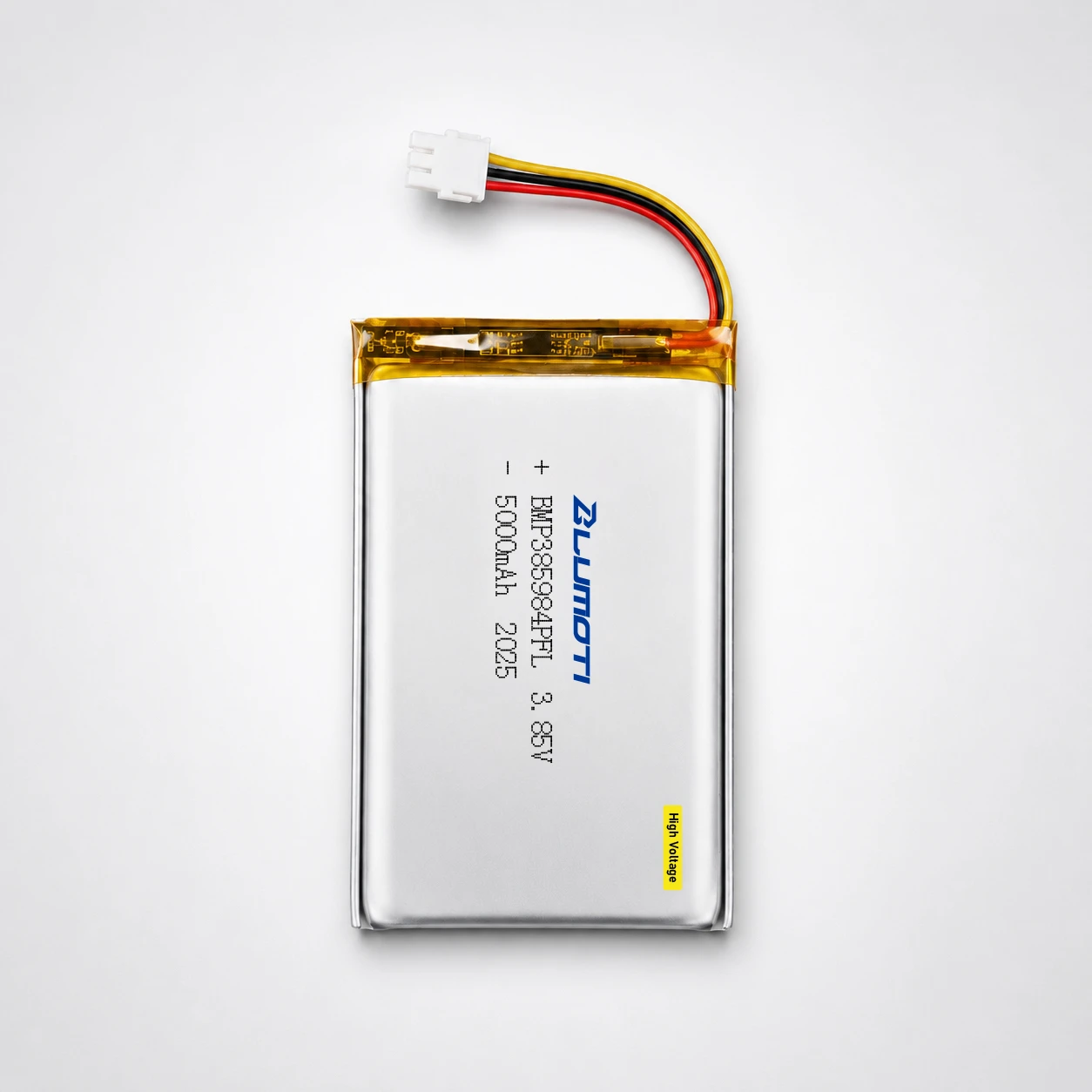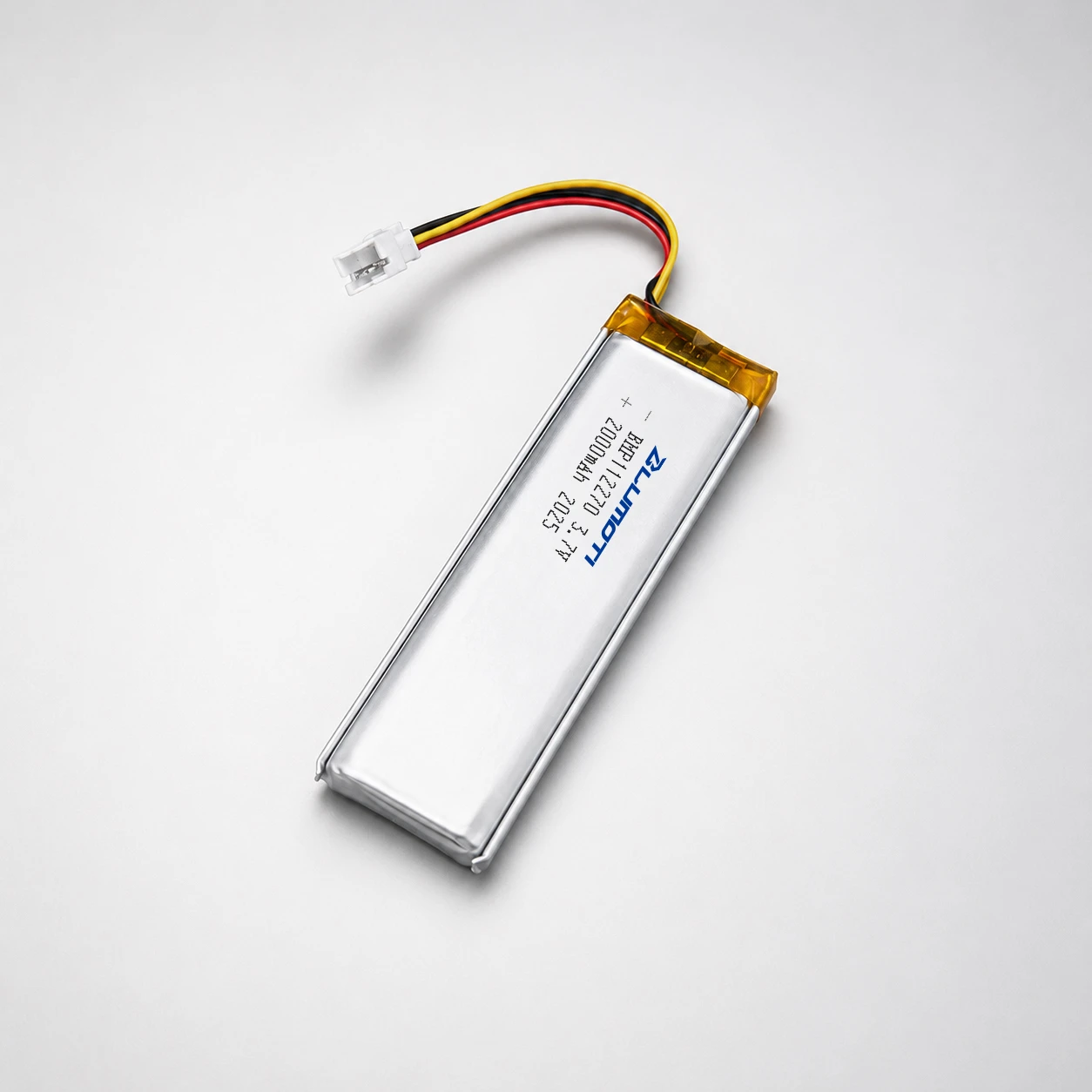

Quick Answer
When sourcing a LiPo battery manufacturer, don't start with price.
First verify five things:
Factory ownership:
Who actually makes the cell and assembles the pack?
01
Engineering capability:
Can the supplier meet your size, load, cycle-life, PCM/BMS, and connector requirements?
02
Compliance:
Are the test reports valid for the exact battery model you are buying?
03
Quality control:
Can they show traceability, OCV/IR matching, aging data, and production test records?
04
Scalability:
Can they move from prototypes to volume production without uncontrolled cell, material, or factory changes?
05
A low quotation means little if the supplier cannot control the design, quality, and compliance behind it.
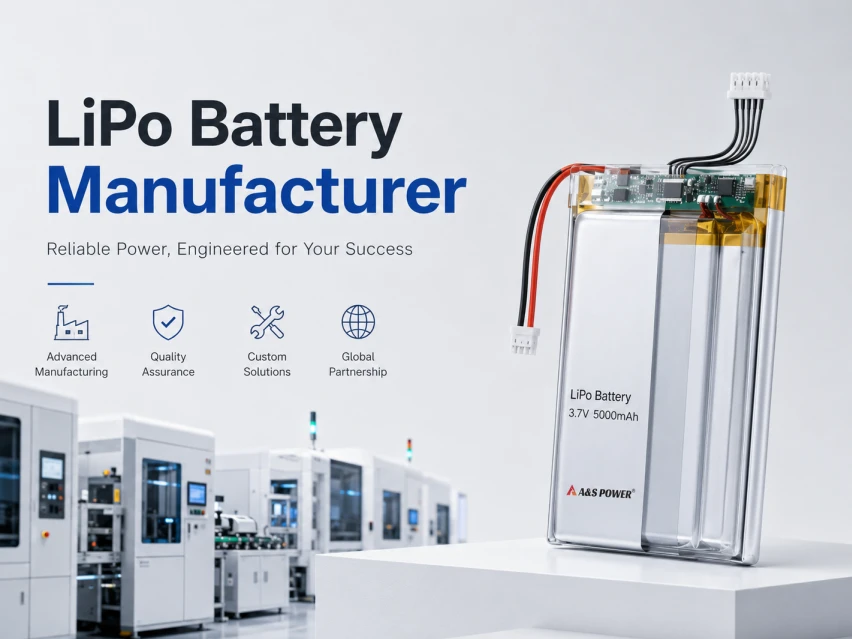
1. Factory or Trading Company?
For a custom battery project, know who is actually responsible for the product.
A direct LiPo battery factory should be able to identify:
- The legal cell manufacturer and production site.
- Who designs and manufactures the PCM/BMS.
- Where samples and mass production will be built.
- What manufacturing and testing processes are performed in-house.
If possible, audit the factory or request a live production walkthrough.
For cell manufacturing, look for coating, winding/stacking, dry-room operations, formation, aging, grading, and test facilities.
Also verify ISO certificates against the legal entity, factory address, certification scope, and validity [1].
A certificate for "electronics sales" does not prove battery manufacturing capability.
2. Verify What They Can Actually Customize
Almost every supplier says they offer customization.
The better question is: what can they engineer and control in-house?
A capable OEM/ODM LiPo battery manufacturer should support the relevant parts of:
Cell → PCM/BMS → Wiring & Connector → Enclosure → Testing → Compliance
For mechanically constrained products, confirm:
- Cell length, width, and thickness.
- Capacity and nominal voltage.
- Tab and wire exit position.
- Connector and NTC configuration.
- PCM dimensions.
- Enclosure or structural requirements.
Suppliers may also offer ultra-thin LiPo cells, curved lithium polymer batteries, and 4.35 V / 4.4 V LiHV designs [2].
If a new cell format is required, ask whether it is an existing platform, a modified design, or a completely new cell. The development risk is very different.
► Discharge Performance
Do not qualify high-discharge LiPo cells from C-rating alone.
Ask for:
- Continuous current.
- Peak current and duration.
- Internal resistance.
- Voltage sag under your load profile.
- Cell temperature.
- Test temperature and cutoff voltage.
- Capacity retention after high-rate cycling.
"10C" without test conditions is a marketing number, not an engineering specification.
► PCM/BMS
For a custom BMS or PCM, confirm the required functions early:
- Over-charge, over-discharge, over-current, and short-circuit protection.
- Cell balancing and temperature monitoring.
- I2C, SMBus, CANBus, UART, or HDQ if required.
- Fuel-gauge IC, SoC, and SoH functions.
Also confirm who owns the schematic, PCB layout, firmware, and validation data.
3. Compliance: Match the Document to the Battery
Do not accept a folder of generic certificates.
The compliance documents must match the battery model, cell, configuration, manufacturer, and target market.
► UN 38.3
Lithium cells and batteries must meet the applicable transport testing requirements under UN Manual of Tests and Criteria, Part III, Subsection 38.3 [3].
Ask for the UN38.3 Test Summary for the battery type you are purchasing.
Check:
- Manufacturer.
- Battery model.
- Cell type.
- Wh rating.
- Test laboratory.
- Report reference.
- Tested configuration.
UN38.3 is not a generic factory certification.
► UL and IEC
For North American projects, UL 1642 and UL 2054 may apply depending on the cell, battery pack, and end product [4].
For portable rechargeable lithium systems, IEC 62133-2 is another common safety standard [5].
Do not assume a report for a similar cell automatically covers your custom pack.
► CE, RoHS, REACH, FCC, BIS
These are often mixed together in supplier quotations, but they are not equivalent.
- RoHS / REACH: Check applicable material and substance requirements for the destination market [6].
- CE: Not a standalone battery certificate; applicability depends on the finished product and relevant EU legislation.
- FCC Part 15: Not a generic requirement for every battery cell.
- BIS / IS 16046: Confirm applicability for the specific battery and Indian end-product category.
Instead of asking, "Do you have all certifications?", give the supplier your target market and product category.
Then ask exactly which battery-level documents they can provide.
4. Quality Control: Ask for Production Data
A factory presentation does not prove process control.
For a rechargeable lithium polymer battery supplier, ask how the following are controlled:
• Capacity.
• Open Circuit Voltage (OCV).
• Internal resistance.
• Cell lot consistency.
• Formation and aging.
• Self-discharge.
• Final pack testing.
For multi-cell packs, OCV, capacity, and impedance matching are particularly important.
If the supplier says they use "Grade A cells," ask for the actual acceptance limits.

Aging and Screening
If the supplier claims elevated-temperature aging, such as 45°C–55°C, ask for:
- Aging temperature.
- Aging duration.
- Initial and final OCV.
- Maximum allowable voltage drop.
- Rejection criteria.
- Whether testing is 100% or sampling-based.
Aging and self-discharge screening can help identify abnormal cells before shipment [7].
Also confirm access to relevant reliability testing such as short circuit, overcharge, vibration, mechanical shock, thermal cycling, and cycle-life testing.
5. Compare Total Cost, Not Unit Price
A custom LiPo battery supplier quotation should be broken down clearly.
Compare:
- Cell cost.
- PCM/BMS cost.
- Connector, wire, and enclosure cost.
- Tooling and NRE.
- Certification and validation costs.
- Packaging.
- Dangerous-goods shipping.
Lithium-ion transportation may involve UN3480 or UN3481 requirements depending on how the battery is shipped [8].
Do not compare Supplier A's EXW cell price with Supplier B's finished-pack DDP price.
Normalize the quotation first.
6. Lead Time and MOQ
Do not accept one number such as "4 weeks."
Separate:
- Engineering review.
- Tooling.
- PCM/BMS development.
- Prototype build.
- Testing and certification.
- Pilot production.
- Mass production.
Existing-cell prototypes may be possible within roughly 2–4 weeks. New cells, BMS designs, molds, or certification programs will take longer.
Mass-production lead time often depends on cell availability, materials, factory loading, and testing requirements.
For MOQ, ask what is driving it:
- Cell production batch.
- Raw materials.
- Connector MOQ.
- PCB quantity.
- Tooling.
- Injection molding.
- Packaging.
A more useful RFQ question is:
What changes at 1,000, 5,000, 20,000, and 100,000 units?
Compare price, lead time, material commitment, and production capacity at each level.
7. 10 Questions to Ask Before Awarding the Business
01. Who manufactures the cell?
02. What cycle life is guaranteed?
03.What components are used in the PCM/BMS?
04.Who owns the tooling and IP?
05.How is the battery traced?
06.What documents are supplied before shipment ?
07.What does the warranty cover?
08.Can they scale without changing the qualified design?
09.Can your engineers talk directly to their engineers?
10.Can they ship lithium batteries to your destination?
Custom LiPo Battery Projects With Blumoti Battery
Blumoti Battery provides custom lithium polymer battery packs, high-discharge LiPo cells, and smart BMS solutions for OEM applications.
For a technical review, send your battery dimensions, capacity, load profile, operating temperature, compliance requirements, pilot quantity, and annual forecast.
References & Authoritative Sources
[1] ISO - ISO 9001 Quality Management Systems and ISO 14001 Environmental Management Systems.
https://www.iso.org/standards.html
[2] The Electrochemical Society / Journal of The Electrochemical Society - High-voltage lithium-ion battery cathode chemistry research.
DOI: 10.1149/1945-7111/ab8062
[3] UNECE - UN Manual of Tests and Criteria, Part III, Subsection 38.3.
https://unece.org/transport/dangerous-goods
[4] UL Standards & Engagement - UL 1642 and UL 2054.
https://www.shopulstandards.com
[5] IEC - IEC 62133-2, safety requirements for portable secondary lithium cells and batteries.
https://webstore.iec.ch/publication/30740
[6] European Union / ECHA - RoHS Directive 2011/65/EU and REACH Regulation (EC) No 1907/2006.
https://echa.europa.eu
[7] Journal of Power Sources - Lithium-ion aging and self-discharge research.
DOI: 10.1016/j.jpowsour.2018.06.071
[8] IATA - Lithium Battery Shipping / Dangerous Goods Regulations, including UN3480 and UN3481.
https://www.iata.org/en/programs/cargo/dgr/lithium-batteries/