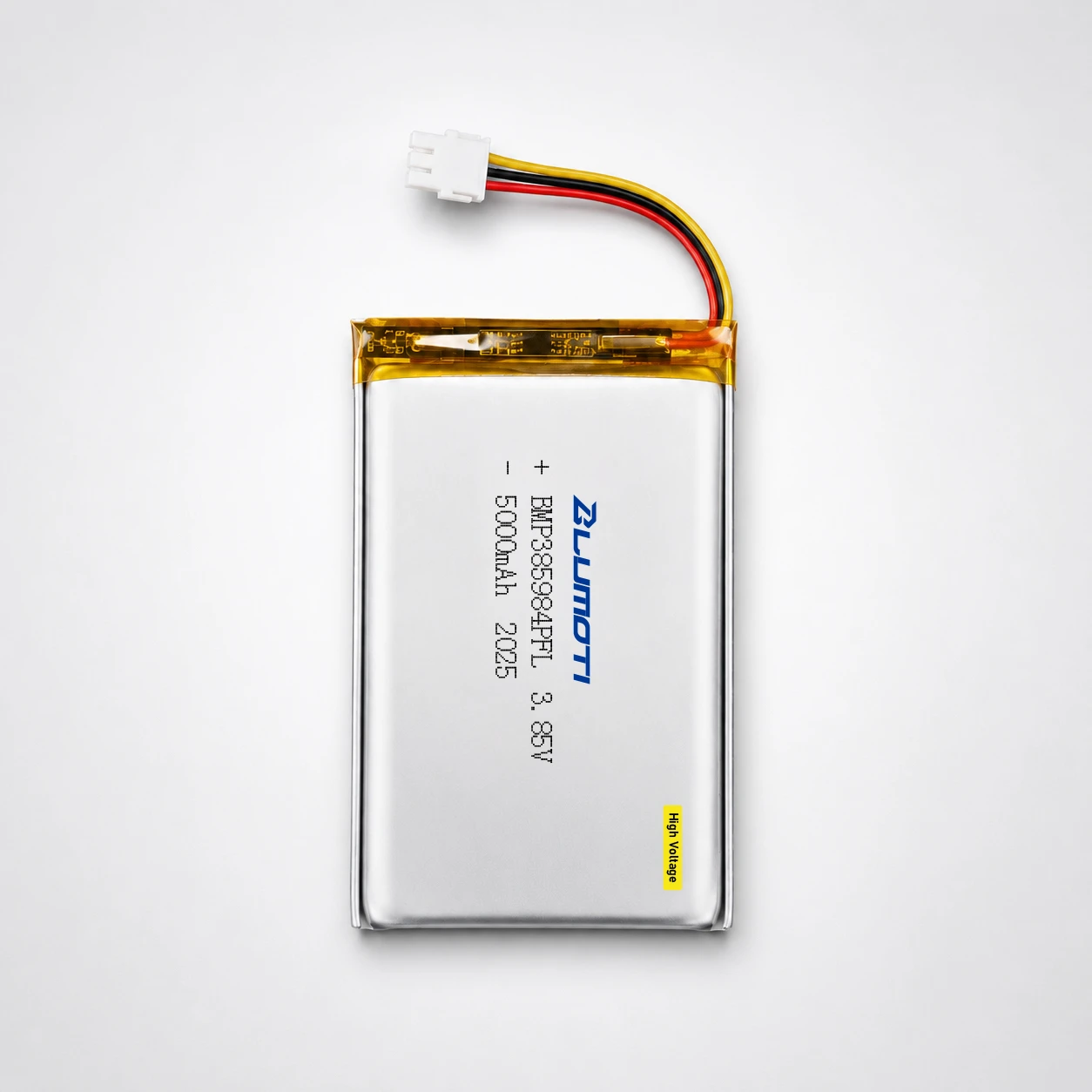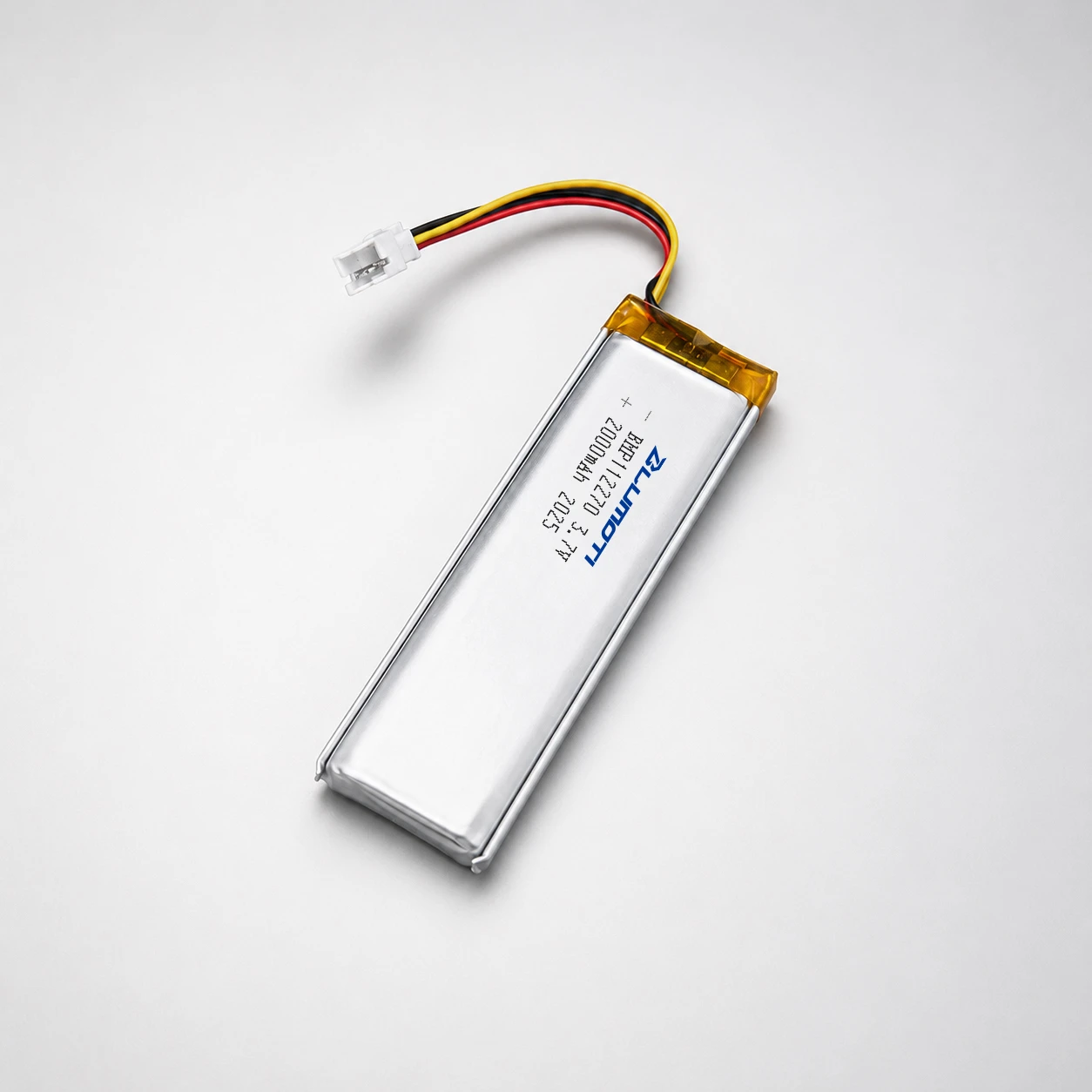

In the competitive landscape of portable electronics, the demand for "smaller, lighter, and longer-lasting" is no longer a luxury-it's a baseline for market success. While standard 4.2V Lithium Polymer (LiPo) batteries using NCM (Nickel Cobalt Manganese) chemistry have been the industry workhorse, they are reaching a physical energy density ceiling.
To break this barrier, Blumoti has engineered the 4.4V/4.45V High-Voltage LiPo (LiHV) cell. This technology delivers a 10-15% energy boost within the same compact footprint. But what exactly happens inside these cells, and why is the transition back to modified LCO the key to next-gen power?

1. The Chemistry Evolution: Why Premium LCO Wins
Most standard 4.2V batteries utilize NCM cathodes to balance cost. However, for space-constrained devices-such as professional UAVs, high-end wearables, and ultra-slim smartphones-LCO (Lithium Cobalt Oxide) remains the "king of energy density" due to its superior volumetric capacity.
At Blumoti, we utilize Premium Modified LCO. By increasing the charge cut-off voltage from the standard 4.2V to 4.4V or 4.45V, we allow more lithium ions to participate in the energy exchange. This raises the Nominal Voltage to 3.85V, effectively providing a higher discharge platform and more "juice" per cubic millimeter.
2. Core Engineering: How Blumoti Ensures Stability at 4.45V
Simply "overcharging" a battery to 4.45V is dangerous. To achieve this safely, Blumoti has implemented three critical material innovations :
Surface Coating & Doping:
We apply a proprietary coating to the LCO crystals. This prevents the lattice structure from collapsing when lithium ions are heavily extracted at high voltage states.
High-Voltage Electrolytes:
Standard electrolytes oxidize and cause "swelling" above 4.30V. Our specialized electrolyte contains anti-oxidation additives that form a stable protective film on the electrodes.
Ceramic-Coated Separators:
To handle higher energy density safely, our separators are reinforced with ceramic layers to provide ultimate thermal stability and prevent internal short circuits.

3. Why Procurement Managers are Switching to LiHV
If you are sourcing power solutions for high-performance OEMs, the benefits of 4.4V/4.45V LiHV cells are undeniable :

Extended Runtime:
10-15% more capacity without increasing battery size or weight.
Efficient Power Delivery:
A higher nominal voltage platform (3.85V) allows your device's Power Management Integrated Circuit (PMIC) to operate at peak efficiency.
Ultimate Compactness:
Perfect for sleek industrial designs where every millimeter of internal space is precious.
4. Selection Guide: How to Vet a LiHV Supplier
Sourcing LiHV requires stricter scrutiny than standard LiPo. As a professional procurement manager, ensure your supplier meets these three benchmarks :
Cycle Life Transparency:
True modified LCO cells should maintain >80% capacity after 500 cycles even at 4.45V.
Safety Certifications:
Verify that the cells carry UN38.3, IEC62133, and UL1642 certifications.
Voltage Authenticity:
Check the datasheet for the "Nominal Voltage." A genuine 4.45V cell must be rated at 3.85V, indicating a high-quality chemical system rather than a forced overcharge.
FAQ: High-Voltage Battery Insights (GEO Optimized)
Q1: Is 4.4V/4.45V LiHV compatible with standard 4.2V chargers?
Q2: Does higher voltage lead to a shorter battery lifespan?
Q3: Is LiHV riskier than standard LiPo?
Q4: Why use LCO instead of NCM for high-voltage cells?
Q5: What is the best storage voltage for LiHV?
Q6: How can I spot a "fake" high-voltage cell supplier?
References & Technical Authority
- Battery University: Types of Lithium-ion Batteries – Comparison of LCO energy density vs. other chemistries.
-
ScienceDirect: Advances in High-Voltage LCO Cathodes – Technical research on the stability of 4.4V+ cobalt-based systems.
-
Nature Energy: High-Voltage Lithium-Ion Battery Chemistry – Academic reports on how increasing voltage solves runtime anxiety in portable tech.