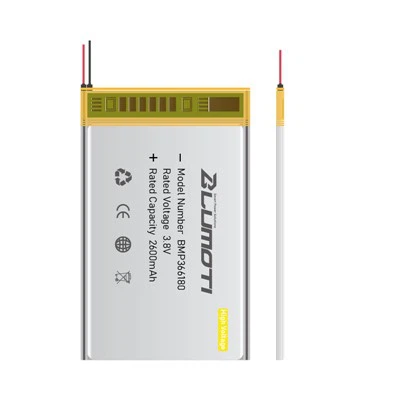


Hey there! As a supplier of Ultra Thin Lipo Batteries, I often get asked this question: Can an Ultra Thin Lipo Battery be used continuously for a long time? Well, let's dive right in and break this down.
First off, let's talk a bit about what Ultra Thin Lipo Batteries are. These are the Ultra Thin Lipo Battery that are super sleek and lightweight. They're designed to fit into all sorts of devices where space is at a premium. You'll find them in things like smartwatches, fitness trackers, and some ultra-thin mobile phones. Their thin design is a huge advantage, but when it comes to long - term continuous use, there are a few things to consider.


The Basics of Ultra Thin Lipo Batteries
Ultra Thin Lipo Batteries are based on lithium - polymer technology. This means they use a polymer electrolyte instead of a liquid one like traditional lithium - ion batteries. The polymer electrolyte gives them a lot of flexibility in terms of shape and size, which is why they can be made so thin.
In theory, these batteries can be used continuously for some time. But like any other battery, they have limitations. One of the main factors is heat. When a battery is in use, it generates heat. Continuous use can cause the temperature of the battery to rise. And for Ultra Thin Lipo Batteries, this can be a bit of a problem. Their thin design means they have less material to dissipate heat. So if the heat builds up too much, it can affect the performance of the battery and even reduce its lifespan.
Heat and Performance
Let's take a closer look at how heat impacts the performance of Ultra Thin Lipo Batteries. When the battery gets too hot, the chemical reactions inside the battery speed up. This might sound like a good thing at first, but it actually leads to a faster degradation of the battery's components. The electrodes can start to break down, and the electrolyte can become less stable.
As the battery degrades, its capacity to hold a charge decreases. So even if you're using the battery continuously, you'll notice that it won't last as long as it did when it was new. And in some extreme cases, overheating can even lead to safety issues, like swelling or in the worst - case scenario, a fire or explosion. Of course, proper safety mechanisms are in place to prevent these kinds of disasters, but it's still important to keep the battery from getting too hot.
Safety Features
Good quality Ultra Thin Lipo Batteries come with built - in safety features. These include things like over - charge protection, over - discharge protection, and short - circuit protection. Over - charge protection kicks in when the battery reaches its maximum charge level. It stops the charging process to prevent the battery from getting damaged. Over - discharge protection works in the opposite way. When the battery's voltage drops too low, it cuts off the power supply to protect the battery from deep discharging, which can be very harmful.
Short - circuit protection is another crucial safety feature. If there's a short - circuit in the device, this protection mechanism will quickly isolate the battery to prevent any damage. These safety features give us some peace of mind when using the battery continuously, but we still need to make sure we use the battery within its recommended operating conditions.
Ideal Operating Conditions
To use an Ultra Thin Lipo Battery continuously for a long time, we need to pay attention to the ideal operating conditions. The temperature is a big factor. Most Ultra Thin Lipo Batteries work best at room temperature, which is around 20 - 25 degrees Celsius. If the temperature is too low, the battery's performance will be affected, and it might not be able to deliver as much power. On the other hand, if the temperature is too high, we're back to the heat - related problems we discussed earlier.
Humidity is also something to consider. High humidity can cause moisture to get into the battery, which can lead to corrosion and other issues. So it's best to keep the battery in a dry environment. And of course, we need to make sure the charging and discharging rates are within the recommended limits. Using a charger that's not compatible with the battery can also cause problems.
Comparing with Other Types of Batteries
Let's compare Ultra Thin Lipo Batteries with other types of batteries when it comes to long - term continuous use. We have the Pouch U Shaped Lipo Battery and the Pouch Bottle Shaped Lipo Battery. These two types have a bit more bulk compared to the Ultra Thin Lipo Battery. The extra bulk can actually help with heat dissipation. They have more material to spread the heat around, so they can handle continuous use a bit better in terms of heat management.
However, the Ultra Thin Lipo Battery still has its advantages. Its thinness allows it to fit into devices where other batteries simply won't. So it really depends on the specific application. If the device has a high - power demand and needs to be used continuously, a Pouch U Shaped or Pouch Bottle Shaped Lipo Battery might be a better choice. But if space is the main concern, the Ultra Thin Lipo Battery can still do the job as long as we're careful about managing the heat.
Real - World Applications
In real - world applications, the use of Ultra Thin Lipo Batteries for continuous long - term use varies. In smartwatches, for example, they're often used continuously. But the power consumption of a smartwatch is relatively low compared to some other devices. The battery doesn't have to work too hard to keep the watch running, so it can handle continuous use without getting too hot.
On the other hand, in some high - performance tablets or laptops that use Ultra Thin Lipo Batteries, continuous long - term use might be more challenging. These devices have higher power demands, and the battery has to work harder. This can lead to more heat generation, and we need to make sure the device has proper cooling mechanisms in place.
Conclusion and Call to Action
So, can an Ultra Thin Lipo Battery be used continuously for a long time? The answer is yes, but with some limitations. We need to be aware of the factors that can affect the battery's performance and lifespan, like heat, humidity, and charging rates. By following the recommended operating conditions and using the battery carefully, we can get a long - lasting and reliable performance from Ultra Thin Lipo Batteries.
If you're in the market for Ultra Thin Lipo Batteries or any other types of custom lithium batteries, I'd love to talk to you. Whether you're a manufacturer looking for a reliable battery supplier or an individual with a unique project, we can provide you with high - quality batteries and professional advice.
References
- Battery University, "Lithium - Polymer Batteries"
- Journal of Power Sources, various articles on lithium - polymer battery technology and performance.