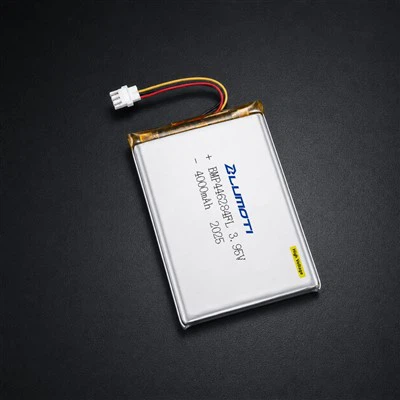


As a supplier of Pouch U Shaped Lipo Batteries, I've witnessed firsthand the increasing demand for high - power output batteries in various industries. In this blog, I'll share some effective strategies on how to increase the power output of a Pouch U Shaped Lipo Battery.
Understanding the Basics of Pouch U Shaped Lipo Batteries
Before delving into the methods of increasing power output, it's essential to understand the fundamental structure and working principles of Pouch U Shaped Lipo Batteries. These batteries are known for their flexibility in design, making them suitable for applications where space is limited or a specific shape is required. They consist of a cathode, an anode, and an electrolyte. The electrochemical reactions between the cathode and anode during charging and discharging processes are what generate electrical energy.
The power output of a battery is determined by two main factors: voltage and current. Power (P) is calculated using the formula P = V × I, where V is voltage and I is current. Therefore, to increase the power output of a Pouch U Shaped Lipo Battery, we need to either increase the voltage or the current, or both.
Increasing the Voltage
Cell Configuration
One of the most straightforward ways to increase the voltage of a Pouch U Shaped Lipo Battery is by connecting multiple cells in series. When cells are connected in series, the voltages of individual cells add up. For example, if a single cell has a voltage of 3.7V, connecting three such cells in series will result in a battery with a voltage of 11.1V. However, it's crucial to ensure that all cells in the series have similar capacities and states of charge to prevent over - charging or under - charging of individual cells.
Electrode Materials
The choice of electrode materials can also have a significant impact on the voltage of the battery. High - voltage cathode materials, such as lithium cobalt oxide (LiCoO₂) or lithium nickel manganese cobalt oxide (NMC), can increase the battery's voltage. These materials have a higher electrochemical potential compared to traditional cathode materials, which leads to a higher output voltage. However, they also come with some drawbacks, such as reduced cycle life and higher cost.
Increasing the Current
Electrode Surface Area
The current output of a battery is related to the rate at which electrochemical reactions can occur at the electrode surfaces. By increasing the electrode surface area, more active materials are exposed to the electrolyte, allowing for a higher rate of reaction and thus a higher current output. This can be achieved by using thinner electrodes or by increasing the number of electrode layers in the battery.
Electrolyte Conductivity
The electrolyte plays a crucial role in the transport of ions between the cathode and anode. A highly conductive electrolyte allows for faster ion movement, which in turn enables a higher current output. Using electrolytes with high ionic conductivity, such as lithium hexafluorophosphate (LiPF₆) in a suitable solvent, can improve the battery's performance. Additionally, additives can be used to enhance the electrolyte's conductivity and stability.
Improving Battery Design
Thermal Management
Heat generation is an inevitable by - product of battery operation, especially during high - power discharge. Excessive heat can reduce the battery's performance and lifespan. Therefore, effective thermal management is essential to increase the power output of a Pouch U Shaped Lipo Battery. This can be achieved by incorporating heat - dissipating materials, such as graphite sheets or aluminum heat sinks, into the battery design. Additionally, proper ventilation and cooling systems can be used to maintain the battery at an optimal operating temperature.
Internal Resistance Reduction
Internal resistance is another factor that affects the power output of a battery. A high internal resistance leads to energy losses in the form of heat, reducing the battery's efficiency. To reduce internal resistance, we can optimize the electrode and electrolyte materials, as well as the battery's manufacturing process. For example, using high - quality conductive additives in the electrodes can improve their electrical conductivity and reduce the internal resistance.
Advanced Technologies
Battery Management Systems (BMS)
A Battery Management System (BMS) is an essential component of a high - performance battery. It monitors and controls the battery's charging and discharging processes, ensuring that the battery operates within safe limits. A well - designed BMS can optimize the power output of a Pouch U Shaped Lipo Battery by balancing the cells, preventing over - charging and over - discharging, and providing accurate information about the battery's state of charge and health.
Nanotechnology
Nanotechnology has the potential to revolutionize the battery industry. By using nanomaterials in the electrodes and electrolytes, we can increase the surface area of the active materials, improve the ionic conductivity, and enhance the battery's overall performance. For example, nanoscale lithium titanate (Li₄Ti₅O₁₂) can be used as an anode material, which offers high power density and long cycle life.
Applications and Considerations
Pouch U Shaped Lipo Batteries are widely used in various applications, such as consumer electronics, medical devices, and electric vehicles. When increasing the power output of these batteries, it's important to consider the specific requirements of the application. For example, in consumer electronics, size and weight are often critical factors, while in electric vehicles, safety and long - term reliability are of utmost importance.
In addition to the methods mentioned above, it's also crucial to follow proper charging and discharging procedures to ensure the long - term performance and safety of the battery. Over - charging or over - discharging can damage the battery and reduce its power output.


Conclusion
Increasing the power output of a Pouch U Shaped Lipo Battery requires a comprehensive approach that involves optimizing the cell configuration, electrode materials, battery design, and using advanced technologies. As a supplier of Pouch U Shaped Lipo Battery, we are committed to providing high - quality batteries with enhanced power output. Our expertise in battery technology allows us to customize batteries according to the specific needs of our customers.
If you are interested in our Pouch U Shaped Lipo Batteries or have any questions about increasing their power output, please feel free to contact us for further discussion and procurement negotiation. We also offer other types of custom lithium batteries, such as Pouch Bottle Shaped Lipo Battery, Pouch Ultra Narrow Polymer Battery, Ultra Thin Lithium Polymer Battery, and Pouch Curved Lipo Battery.
References
- Arora, P., & Zhang, Z. (2004). Battery separators. Chemical Reviews, 104(10), 4419 - 4462.
- Goodenough, J. B., & Kim, Y. (2010). Challenges for rechargeable Li batteries. Chemistry of Materials, 22(3), 587 - 603.
- Tarascon, J. M., & Armand, M. (2001). Issues and challenges facing rechargeable lithium batteries. Nature, 414(6861), 359 - 367.