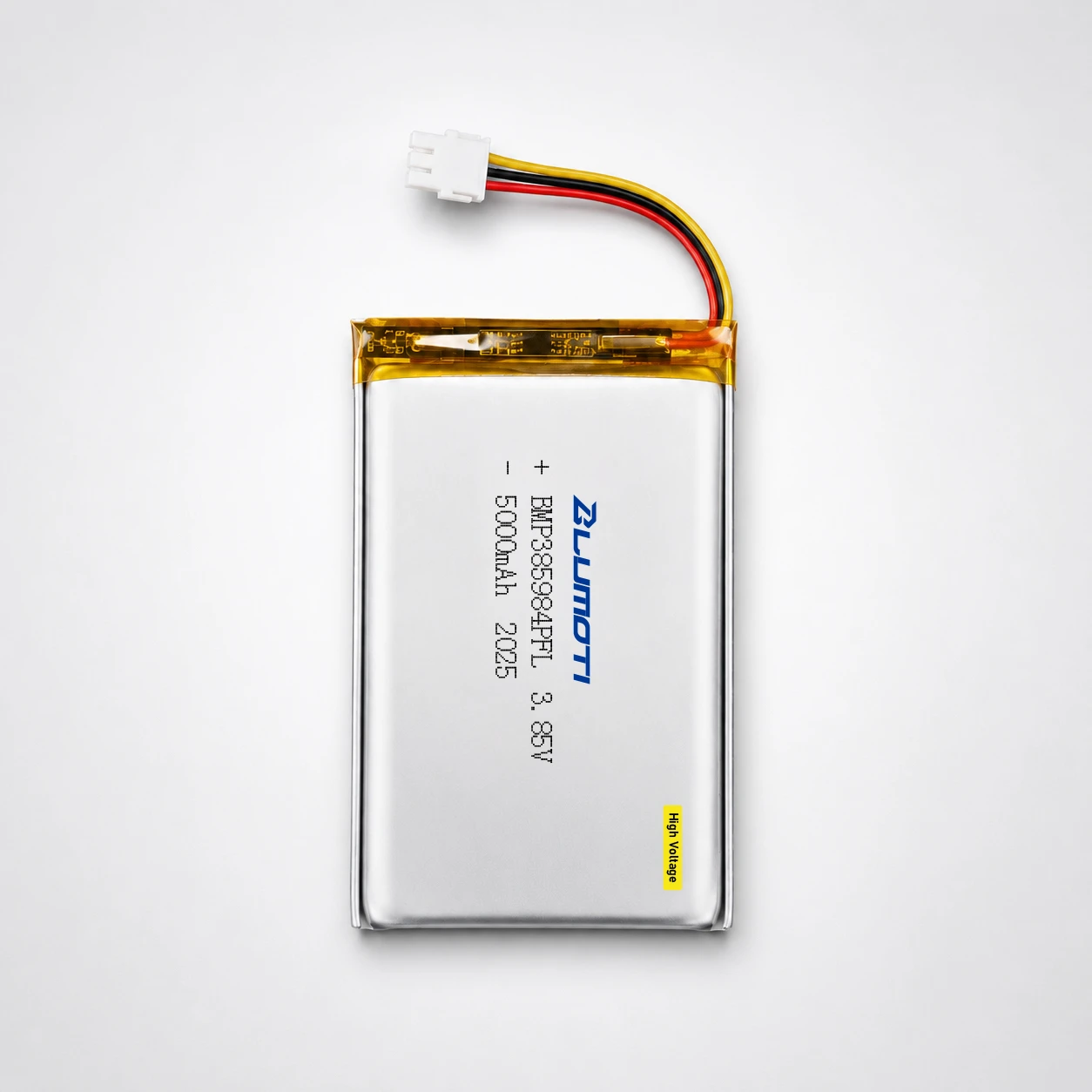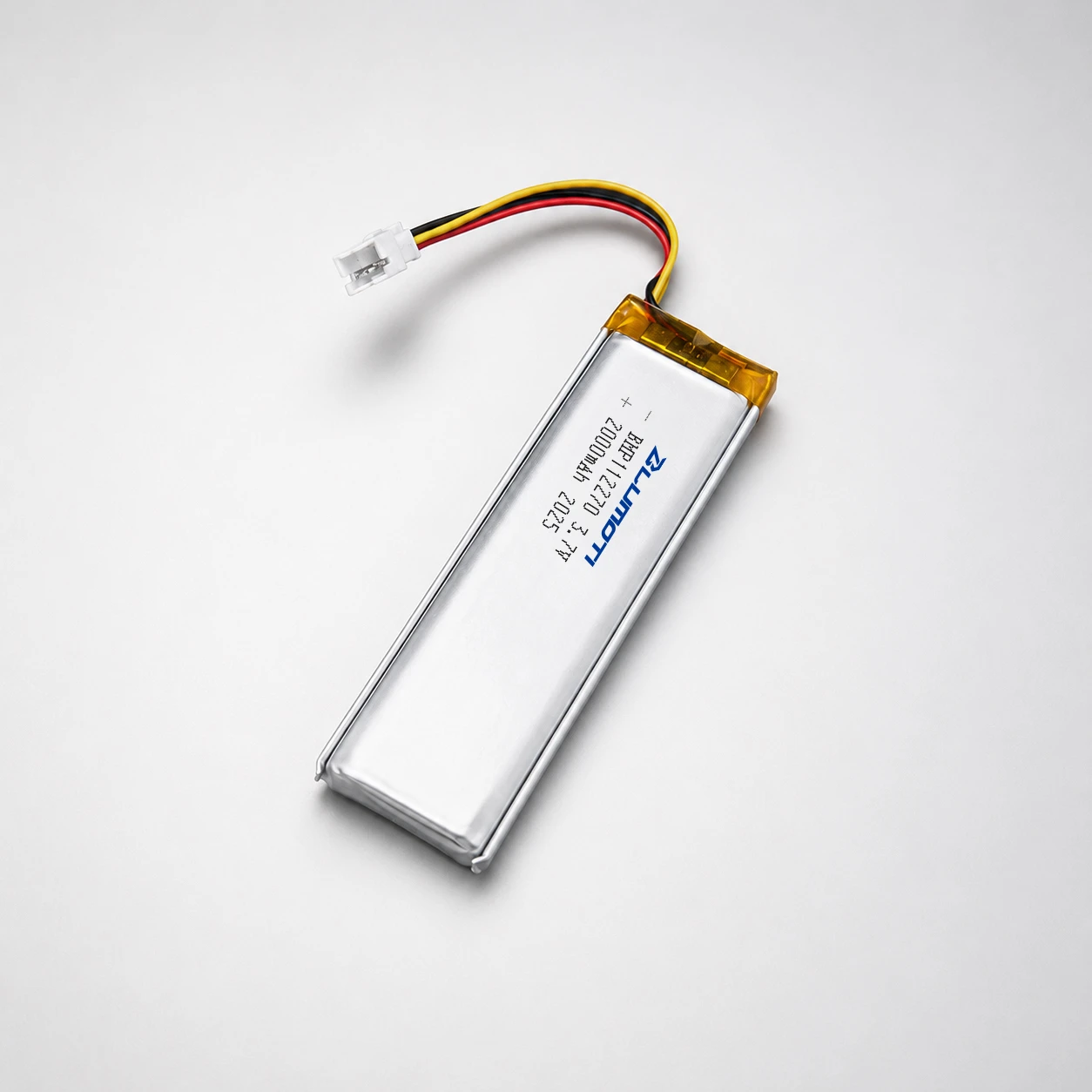

If you use RC cars, FPV drones, fixed-wing aircraft, robots, or portable equipment, you have probably come across a 3S LiPo battery. It is one of the most common battery options for applications that need a good balance of voltage, power, weight, and runtime.
But choosing the right 3S battery is not always simple. What is the difference between 11.1V and 12.6V? How much capacity do you need? What does a 50C rating actually mean? And how should you charge and store the battery safely?
In this guide, Blumoti Battery breaks down the key 3S LiPo specifications in plain English. We will cover voltage, capacity, C-rating, internal resistance, battery selection, charging, storage, and basic maintenance.
For custom 3S LiPo battery solutions, visit www.blumoti-battery.com.
What Is a 3S Lithium Polymer Battery?
1. What Does "3S" Mean on a LiPo Battery?
In lithium polymer battery terminology, "S" stands for series.
A 3S LiPo battery contains three individual lithium polymer cells connected in series. A series connection adds the cell voltages together, while the battery capacity stays the same.
- 3S1P: Three cells in series and one parallel group.
- 3S2P: Six cells arranged in a three-series, two-parallel configuration. The voltage remains the same as a 3S pack, while the capacity is twice that of a single cell.


2. Is a 3S LiPo Battery 11.1V or 12.6V?
Both values are correct. They represent different states of charge.
3S LiPo Cell and Pack Voltage
|
Battery Status |
Voltage per Cell |
Total 3S Voltage |
|
Minimum cutoff |
3.0V |
9.0V |
|
Nominal voltage |
3.7V |
11.1V |
|
Standard full charge |
4.2V |
12.6V |
|
LiHV full charge |
4.35V |
13.05V |
Nominal Voltage: 11.1V
The nominal voltage of a standard LiPo cell is 3.7V. Therefore:
3 × 3.7V = 11.1V
The 3.7V nominal value is commonly used for lithium-ion cells based on LCO and NMC chemistry. [1]
Fully Charged Voltage: 12.6V
A standard LiPo cell reaches 4.2V when fully charged. Therefore:
3 × 4.2V = 12.6V
The standard upper charging voltage is approximately 4.20V ± 0.05V per cell. [2]
LiHV Full-Charge Voltage: 13.05V
A high-voltage lithium polymer battery, also known as a LiHV battery, can be charged to 4.35V per cell.
3 × 4.35V = 13.05V
LiHV cells use high-voltage electrolyte and material systems designed for a 4.35V charging limit. [3]
Minimum Safe Voltage: 9.0V to 10.5V
The electrochemical lower limit is approximately 3.0V per cell, or 9.0V for a 3S pack.
In actual use, it is better to stop operating or land when the voltage reaches about 3.5V per cell, or 10.5V for a 3S pack. This helps extend battery cycle life.


Core Specifications: Capacity, C-Rating, and Connectors
When buying or customizing a 3S LiPo soft-pack or hard-case battery, focus on three main specifications.
|
Specification |
Common Unit or Range |
Effect on Performance |
|
Capacity |
450mAh to 5000mAh+ |
Determines battery runtime |
|
C-Rating |
25C, 50C, 100C to 160C |
Indicates discharge capability |
|
Connectors |
XT60, Deans, EC3, JST-XH |
Affect compatibility and current transfer |
1. Battery Capacity: mAh and Ah
Battery capacity is measured in milliamp-hours, or mAh.
For example, an 11.1V 1500mAh 3S LiPo battery can theoretically provide 1.5A for one hour.
1500mAh = 1.5Ah
Actual runtime depends on the load, discharge rate, battery condition, temperature, and voltage cutoff.
2. Discharge C-Rating
The C-rating indicates how much current a battery can deliver relative to its capacity.
Maximum continuous discharge current:
Imax (A) = Capacity (Ah) × C-Rating
This calculation is based on the physical relationship Q = I × t and the standard battery C-rate convention. [4]
For a 3S 2200mAh 50C LiPo battery:
2200mAh ÷ 1000 = 2.2Ah
2.2Ah × 50C = 110A
The calculated maximum continuous output current is 110A.
In RC racing cars and FPV drones, a higher C-rating, such as 75C, 100C, or 120C, can reduce voltage sag during rapid acceleration. It also helps prevent the system from triggering low-voltage protection under heavy load.


3. Battery Connectors
The main power connector carries current to the ESC or other equipment.
Common connector types include:
- XT60
- Deans
- EC3
- XT30
- JST
Most 3S LiPo batteries use a four-pin JST-XH balance connector. It allows the charger to monitor and balance all three cells during charging.
3S Battery Comparison and Selection Guide
1. 3S vs. 2S: Should You Upgrade to 3S?
A 2S LiPo battery has a nominal voltage of 7.4V. A 3S LiPo battery has a nominal voltage of 11.1V.
Moving from 2S to 3S increases the nominal voltage by 50%.
For the same motor, approximate motor speed can be calculated as:
RPM = Motor KV × Voltage
The higher voltage can significantly increase motor speed and power output.
Before upgrading from 2S to 3S, confirm that the ESC and motor can handle the fully charged voltage of 12.6V.
Using a 3S battery with a 2S-only ESC can damage the ESC MOSFETs and other electronic components.
2. 3S vs. 4S vs. 6S
3S LiPo
Common applications include:
- 3-inch FPV drones
- Toothpick drones
- Cinewhoops
- 1/10-scale RC cars
- Fixed-wing training aircraft
- Portable robots
4S and 6S LiPo
These batteries are commonly used in:
- 5-inch FPV racing drones
- Freestyle FPV drones
- Large RC aircraft
- High-power industrial drones
- High-output robotic systems
A higher-voltage system can deliver the same power at a lower current.
P = V × I
Resistive heat loss is:
Power loss = I² × R
Lower current can reduce heat in wires, connectors, and electronic components.
Safe Charging and Maintenance
1. How to Safely Charge and Balance a 3S LiPo Battery
Always use a dedicated LiPo balance charger.
Never charge a LiPo battery in NiMH mode.
Balance charging allows the charger to monitor each cell and keep the cell voltages closely matched.
For a standard 3S LiPo battery, select:
- Battery type: LiPo
- Cell count: 3S
- Maximum voltage: 12.6V
- Charging mode: Balance Charge
For a 3S LiHV battery, select:
- Battery type: LiHV
- Cell count: 3S
- Maximum voltage: 13.05V
Do not use LiHV mode for a standard 4.2V LiPo battery.


2. Standard 1C Charging Current
Unless the manufacturer specifies otherwise, 1C is the standard recommended charging rate.
1C charging current (A) = Battery capacity (mAh) ÷ 1000
Examples:
1500mAh ÷ 1000 = 1.5A
2200mAh ÷ 1000 = 2.2A
A 1500mAh battery should be charged at 1.5A. A 2200mAh battery should be charged at 2.2A.
3. How Long Does a 3S LiPo Take to Charge?
At a 1C charging rate, a deeply discharged battery usually takes about 45 to 60 minutes to charge.
The exact charging time depends on the constant-current, constant-voltage, and cell-balancing stages.
4. Charging Safety
Place the battery inside a LiPo-safe charging bag or a suitable fire-resistant metal container.
Never leave a charging battery unattended.
Stop charging immediately if the battery:
- Swells
- Leaks
- Smokes
- Produces an unusual odor
- Becomes excessively hot
Proper Storage Voltage
For storage longer than 48 hours, do not leave a LiPo battery fully charged or deeply discharged.
Do not store a 3S battery at:
- 12.6V for long periods
- Below 10.5V for long periods
Use the charger's Storage mode and adjust the battery to:
3.80V to 3.85V per cell
For a 3S battery:
3 × 3.80V = 11.40V
3 × 3.85V = 11.55V
Recommended 3S storage voltage:
11.40V to 11.55V
This is approximately 40% to 50% state of charge. At this level, the electrode and electrolyte interfaces are more stable, and unwanted side reactions are reduced. [5]
Storing a battery at full charge can accelerate electrolyte decomposition, capacity loss, internal resistance growth, and swelling.
Swelling, Over-Discharge, and Battery Damage
1. Swollen or Damaged Batteries
Stop using the battery if it shows any of the following signs:
- Visible swelling
- Electrolyte leakage
- An unusual chemical odor
- Physical puncture or crushing
- Excessive heat
- Severe cell imbalance
- A major increase in internal resistance
A swollen battery should not be charged, punctured, compressed, or reused.
2. Internal Resistance
Internal resistance, or IR, affects voltage sag and heat generation.
A battery with rising internal resistance may show:
- Greater voltage sag
- More heat under load
- Lower peak-current output
- Reduced usable capacity
Internal resistance varies with cell capacity, temperature, state of charge, chemistry, and measurement method.
For this reason, compare the battery with its previous readings or with an identical new battery tested under the same conditions.
3. Electrochemical Damage Caused by Over-Discharge
When a cell voltage falls below approximately 2.5V to 3.0V, the copper current collector at the negative electrode may begin to dissolve.
During recharging, the dissolved copper may redeposit and form copper dendrites. These dendrites can damage or penetrate the separator, causing an internal short circuit and increasing the risk of thermal runaway. [6]
The damage process can be summarized as follows:
Cell voltage falls below 2.5V–3.0V
Copper current collector begins to dissolve
The damaged cell is recharged
Copper dendrites may form
The separator may be penetrated
An internal short circuit may occur
Thermal runaway or fire may result
Do not try to recover a severely over-discharged LiPo battery by charging it in NiMH mode.
How to Dispose of a Dead or Swollen 3S LiPo Battery
Do not place a LiPo battery in household trash.
Do not puncture, crush, burn, or open the battery.
The saltwater method is not recommended. Saltwater may corrode and break the battery terminals before the remaining energy has been fully discharged.
Use a suitable resistive discharger or small light bulb to slowly discharge an undamaged battery, following appropriate safety procedures.
After discharge:
- Insulate the connectors with nonconductive tape.
- Place the battery in a suitable fire-resistant container.
- Take it to a local battery recycling center, electronics recycling center, or hazardous-waste facility.
A swollen, leaking, punctured, or otherwise damaged battery should be handled according to the instructions of the local recycling facility.
Why Choose Blumoti Battery for 3S LiPo Solutions?
Blumoti Battery provides high-performance lithium battery solutions for customers worldwide.
We offer high-C-rate, low-resistance, and closely matched lithium polymer battery packs, along with OEM and ODM customization services.
Stacking Technology
Our stacking process is designed to reduce internal resistance compared with traditional wound-cell construction. It also supports higher energy density and lower battery weight.
Ultra-Low Internal Resistance
Cell internal resistance can be as low as 1–3mΩ, helping the battery maintain a stable voltage under heavy load while reducing heat generation.
Precision Cell Matching
Each 3S battery pack is matched based on:
- Capacity
- Voltage
- Internal resistance
This helps maintain consistent performance and cell balance throughout the pack.
Flexible Customization
Available options include:
- Capacity: 450mAh to 10000mAh+
- Discharge rate: 30C to 160C
- XT60, Deans, EC3, and other connectors
- Soft-pack and hard-case designs
- Industrial and consumer battery configurations
For high-quality 3S lithium polymer battery solutions or custom battery packs, visit:
Frequently Asked Questions
Q1: What Size ESC Do I Need for a 3S LiPo Battery?
The ESC must support a fully charged 3S voltage of 12.6V.
Its current rating should also be higher than the motor's maximum load current.
For example, if the motor draws 25A at full throttle on 3S, a 30A or 35A ESC is recommended to provide at least a 20% safety margin.
Q2: What Is the Nominal Voltage of a 3S LiPo Battery?
The nominal voltage is 11.1V.
3 × 3.7V = 11.1V [1]
Q3: What Is the Maximum Voltage When Fully Charged?
For a standard 3S LiPo battery:
3 × 4.2V = 12.6V [2]
For a 3S LiHV battery:
3 × 4.35V = 13.05V [3]
Q4: How Many Amps Should I Use to Charge a 3S LiPo Battery?
A 1C charging rate is recommended unless the manufacturer specifies otherwise.
Charging current (A) = Capacity (mAh) ÷ 1000
Examples:
- 1500mAh: 1.5A
- 2200mAh: 2.2A
- 5000mAh: 5.0A
Q5: Can a 3S LiPo Battery Catch Fire?
Yes.
A LiPo battery may enter thermal runaway because of:
- Physical puncture
- Severe overcharging
- External short circuits
- Internal short circuits
- Excessive heat
- Severe over-discharge followed by recharging
Always use a qualified balance charger. Charge the battery in a fire-resistant area and never leave it unattended.
References
[1] IEC 61960; Battery University, BU-303. Nominal voltage of common LCO and NMC lithium-ion cells: 3.7V.
[2] IEC 62133; IEEE 1625. Standard LiPo upper charging voltage: approximately 4.20V ± 0.05V per cell.
[3] NASA SP-2015-3705; LiHV industry specifications. LiHV upper charging voltage: approximately 4.35V per cell.
[4] Physical relationship Q = I × t and the standard battery C-rate convention.
[5] Journal of Power Sources; Battery University, BU-702. Recommended storage level: approximately 40%–50% state of charge, or 3.80V–3.85V per cell.
[6] Battery University, BU-808a. Severe over-discharge may cause copper current collector dissolution and copper deposition during recharging.