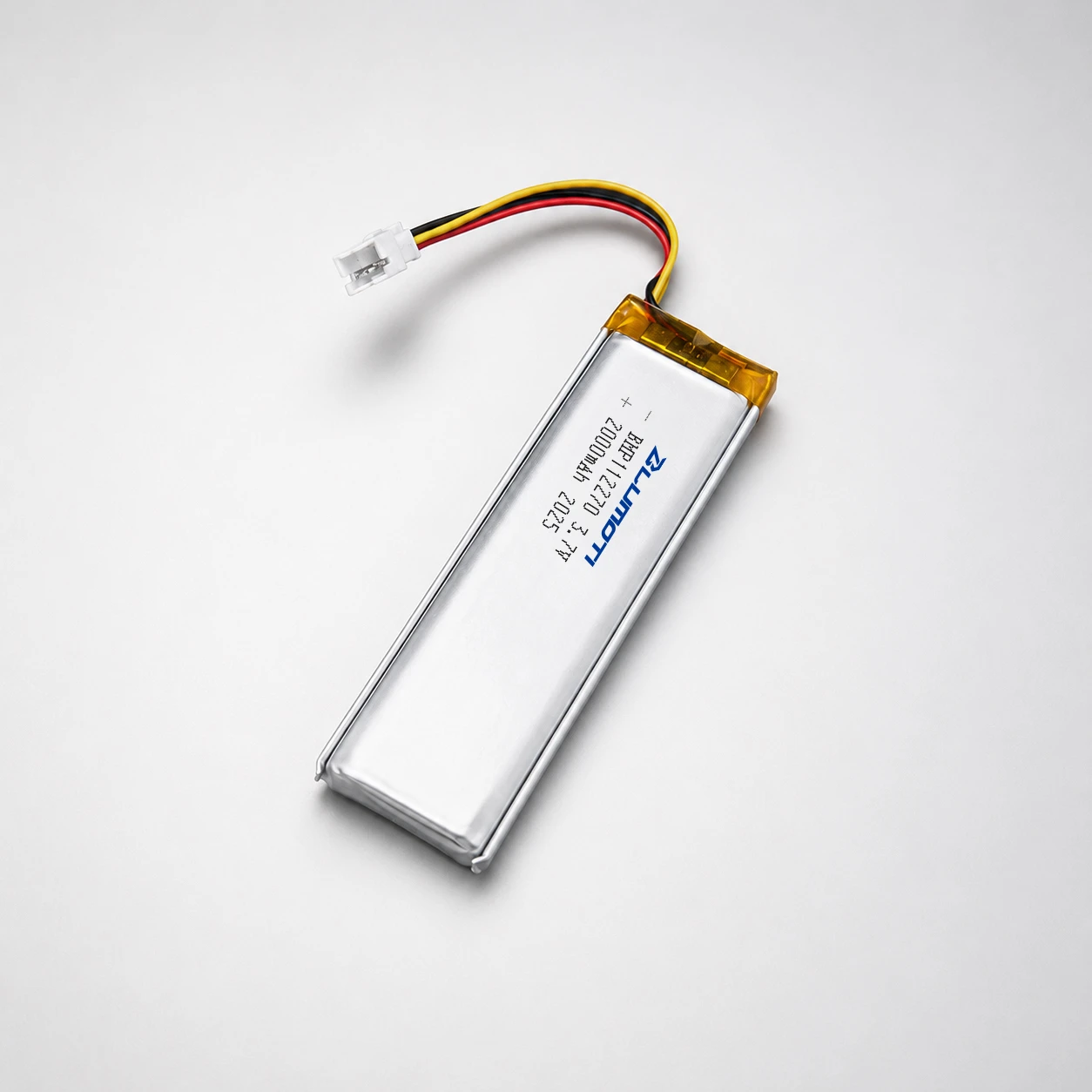


As a reputable supplier specialized in Pouch U Shaped Lipo Batteries, I've encountered numerous inquiries regarding the internal resistance of these unique power sources. Internal resistance is a pivotal factor influencing the performance, efficiency, and overall usability of a battery. In this blog, I'll delve into what the internal resistance of a Pouch U Shaped Lipo Battery is, its implications, and how we, as a supplier, strive to optimize it for our customers.
Understanding Internal Resistance
Internal resistance, in the simplest terms, is the opposition encountered by the electric current within the battery itself. Every battery, regardless of its type and design, has an internal resistance. For a Pouch U Shaped Lipo Battery, this resistance is a result of several factors. The materials used in the battery's construction, such as the electrodes, electrolyte, and separator, all contribute to the overall internal resistance.
The electrodes, typically made of lithium - based compounds in a Lipo battery, have a certain level of electrical resistance. The electrolyte, which facilitates the movement of lithium ions between the electrodes, also presents resistance to ion flow. Additionally, the separator, which prevents short - circuits between the electrodes while allowing ion passage, adds to the internal resistance.
Measurement of Internal Resistance
Measuring the internal resistance of a Pouch U Shaped Lipo Battery is a crucial step in quality control. There are a few common methods for this measurement. One of the most straightforward ways is the DC load method. In this method, a known load is connected to the battery, and the voltage drop across the battery terminals is measured. By using Ohm's law (V = IR), the internal resistance can be calculated.


Another method is the AC impedance spectroscopy. This technique involves applying a small - amplitude alternating current to the battery and measuring the resulting voltage response. By analyzing the impedance spectrum, the internal resistance and other electrochemical parameters of the battery can be determined. This method provides more detailed information about the battery's electrochemical processes but requires more sophisticated equipment.
Implications of Internal Resistance
Performance
The internal resistance has a direct impact on the battery's performance. A high internal resistance means that more energy is dissipated as heat within the battery when current is drawn. This leads to a reduction in the battery's output voltage. For applications that require a stable voltage, such as electronic devices, a high - resistance battery may not be able to provide the necessary power consistently.
Efficiency
Efficiency is another aspect affected by internal resistance. When a battery has a high internal resistance, a significant portion of the electrical energy stored in the battery is wasted as heat. This reduces the overall energy conversion efficiency of the battery. For example, in electric vehicles powered by Pouch U Shaped Lipo Batteries, a high - resistance battery would result in lower mileage per charge, as more energy is lost in the form of heat rather than being used to power the vehicle.
Heat Generation
As mentioned earlier, internal resistance causes heat generation within the battery. Excessive heat can be detrimental to the battery's lifespan and safety. High temperatures can accelerate the degradation of the battery's components, such as the electrodes and electrolyte, leading to a shorter battery life. In extreme cases, overheating can even cause thermal runaway, a dangerous situation where the battery's temperature rises uncontrollably, potentially leading to fire or explosion.
Our Approach as a Supplier
At our company, we understand the critical role of internal resistance in the performance of Pouch U Shaped Lipo Batteries. We take several measures to optimize the internal resistance of our batteries.
Material Selection
We carefully select high - quality materials for our batteries. For the electrodes, we use advanced lithium - based compounds with excellent electrical conductivity. This helps to reduce the resistance at the electrode - electrolyte interface. The electrolyte we choose has a high ionic conductivity, which allows for smooth ion movement between the electrodes, thus lowering the internal resistance.
Manufacturing Process Optimization
Our manufacturing process is designed to minimize internal resistance. We ensure precise control over the thickness and uniformity of the electrodes, separator, and other components. A uniform thickness helps to distribute the current evenly within the battery, reducing the chances of localized high - resistance areas. Additionally, we use advanced assembly techniques to ensure good electrical contact between the different components of the battery.
Quality Control
We have a rigorous quality control system in place to monitor the internal resistance of our batteries. Every battery undergoes multiple tests during the manufacturing process. We use state - of - the - art equipment to measure the internal resistance accurately and ensure that it meets our strict quality standards. Only batteries that pass all the quality control tests are released to the market.
Related Product Offerings
In addition to our Pouch U Shaped Lipo Batteries, we also offer a range of other innovative battery solutions. If you are interested in ultra - thin battery designs, we have Ultra Thin Lipo Battery options that are perfect for applications where space is limited. For those looking for more unique shapes, our Pouch Bottle Shaped Lipo Battery and Pouch Curved Lipo Battery provide flexibility in design and can be customized to meet specific requirements.
Contact for Purchase and Negotiation
If you are interested in our Pouch U Shaped Lipo Batteries or any of our other battery products, we encourage you to reach out to us. Our team of experts is ready to assist you with any questions you may have regarding product specifications, internal resistance, and pricing. We are committed to providing high - quality batteries at competitive prices and excellent customer service. Whether you are a small - scale manufacturer or a large - scale enterprise, we can work with you to meet your battery needs.
References
- Linden, D., & Reddy, T. B. (2002). Handbook of Batteries. McGraw - Hill.
- Tarascon, J. M., & Armand, M. (2001). Issues and challenges facing rechargeable lithium batteries. Nature, 414(6861), 359 - 367.
- Winter, M., & Brodd, R. J. (2004). What are batteries, fuel cells, and supercapacitors?. Chemical Reviews, 104(10), 4245 - 4269.