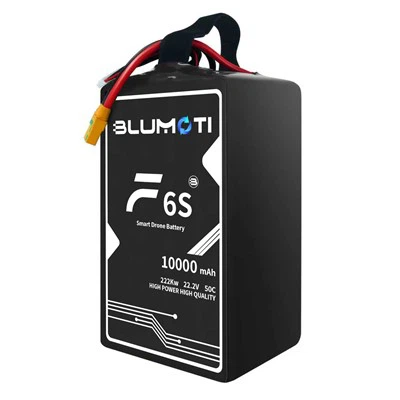


How to Choose a Lithium Battery Pack?
As a supplier of lithium battery packs, I've witnessed firsthand the growing demand for these energy - storage solutions across various industries. The market is flooded with a wide range of lithium battery packs, making the selection process a daunting task for many consumers. In this blog, I'll share some key factors to consider when choosing a lithium battery pack.
1. Voltage and Capacity
The voltage and capacity of a lithium battery pack are two fundamental factors that should be carefully evaluated. Voltage determines the power output of the battery, while capacity indicates how much energy it can store.
For example, if you're powering a small electronic device like a remote - controlled toy, a lower - voltage battery pack might suffice. On the other hand, larger applications such as electric vehicles or power tools require higher - voltage battery packs. Our 6 Cell Lithium Polymer offers a specific voltage and capacity that can be suitable for particular medium - power applications.
Capacity is usually measured in ampere - hours (Ah). A higher - capacity battery will provide more energy and longer runtime. If you need a battery pack for long - term use without frequent recharging, opt for a pack with a larger capacity. However, keep in mind that higher - capacity battery packs are often larger and heavier. Our 4s Li Ion Battery Pack comes with different capacity options to meet various user requirements.
2. Discharge Rate
The discharge rate is another crucial factor, especially for applications that demand high - power output. It is measured in “C” ratings. A higher C rating means the battery can deliver more current in a short period.
For instance, a 15C High Discharge Rate Lithium Polymer Pack can discharge at a rate 15 times its rated capacity. This is ideal for applications like high - performance drones or racing RC cars, where quick bursts of power are needed.
If you need even more power in a short time, a 25C High Discharge Rate Lithium Polymer Pack would be a better choice. However, a high - discharge - rate battery pack may have a shorter lifespan if used continuously at high - power levels. For less power - hungry applications, a 10C Discharge Rate Lithium Polymer battery Pack can provide a good balance between power output and battery life.
3. Battery Chemistry
There are different types of lithium battery chemistries, each with its own advantages and disadvantages. The most common chemistries include lithium - ion (Li - ion), lithium - polymer (Li - Po), and lithium - iron - phosphate (LiFePO4).
Li - ion batteries are widely used due to their high energy density, long cycle life, and relatively low self - discharge rate. They are suitable for a variety of applications, from smartphones to laptops.
Li - Po batteries, on the other hand, are more flexible in terms of shape and size. They can be made into thin and lightweight packs, which is beneficial for applications where space is limited, such as wearable devices.
LiFePO4 batteries are known for their high safety, long cycle life, and good thermal stability. They are often used in electric vehicles and energy - storage systems where safety is a top priority.


4. Safety Features
Safety should always be a top concern when choosing a lithium battery pack. Look for battery packs that have built - in safety features such as over - charge protection, over - discharge protection, and short - circuit protection.
Over - charge protection prevents the battery from being charged beyond its safe voltage limit, which can cause damage to the battery and even lead to a fire. Over - discharge protection stops the battery from discharging below a certain voltage, which can also reduce the battery's lifespan. Short - circuit protection safeguards the battery from damage in case of a short - circuit.
Our lithium battery packs are designed with these safety features to ensure the well - being of our customers and their devices.
5. Temperature Range
The operating temperature range of a lithium battery pack is an important consideration, especially for applications in extreme environments. Lithium batteries perform best within a certain temperature range.
Most lithium battery packs work well between 0°C and 45°C. If you need to use the battery in colder or hotter environments, you should choose a battery pack that is specifically designed to operate in those conditions. For example, some battery packs are equipped with temperature - regulating features to maintain optimal performance in extreme temperatures.
6. Cycle Life
Cycle life refers to the number of charge - discharge cycles a battery can undergo before its capacity drops to a certain level. A higher cycle life means the battery will last longer.
When choosing a lithium battery pack, consider the expected usage frequency. If you plan to use the battery pack frequently, look for a pack with a high cycle life. Our battery packs are engineered to have a long cycle life, providing our customers with reliable and long - lasting energy solutions.
7. Cost
Cost is always a factor in any purchasing decision. However, it's important not to sacrifice quality for a lower price. Cheaper battery packs may not have the same level of performance, safety, or durability as more expensive ones.
When comparing prices, consider the overall value of the battery pack, including its voltage, capacity, discharge rate, safety features, and cycle life. Our company offers a range of lithium battery packs at competitive prices, ensuring that you get the best value for your money.
Conclusion
Choosing the right lithium battery pack requires careful consideration of multiple factors, including voltage, capacity, discharge rate, battery chemistry, safety features, temperature range, cycle life, and cost. By understanding these factors and evaluating your specific needs, you can make an informed decision and select a battery pack that meets your requirements.
If you're interested in purchasing lithium battery packs or have any questions about our products, please feel free to reach out to us. We're always ready to assist you in finding the perfect battery solution for your application.
References
- “Lithium - Ion Batteries: Fundamentals and Applications,” by John B. Goodenough and Y. M. Park.
- “Handbook of Batteries,” edited by David Linden and Thomas B. Reddy.